Atlanta Neighborhoods
Best Atlanta Neighborhoods for Remote Workers: Walkability, Fiber & Quality of Life 2026
Which Atlanta neighborhoods actually work for remote work in 2026: fiber speed, walkability, and how WFH space affects home value.
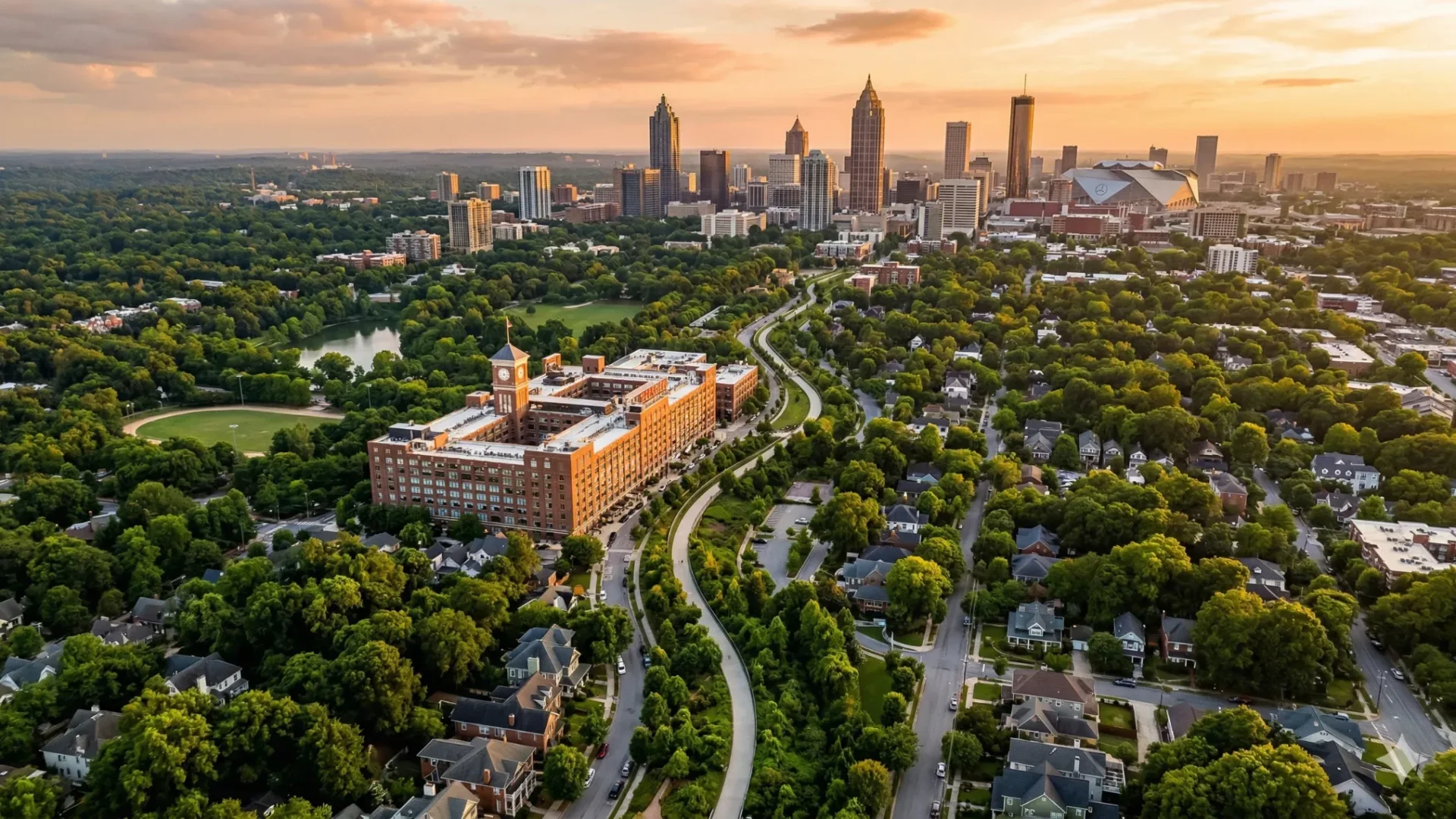
Atlanta just ranked #1 in the country for remote workers. Not a metro-area ranking, not a regional list, first in the nation, according to CoworkingCafe’s 2026 analysis of U.S. cities. The metrics behind that ranking: 119 coworking spaces across the metro, the highest coworking density in the country, 25.6% of Atlanta’s workforce operating remotely, reliable fiber infrastructure across most of the city, and average coworking rates around $199 per month, well below what you’d pay in comparable cities.
That’s the big-picture story. But if you’re actually deciding where to buy a home in Metro Atlanta as a remote worker, the city-level ranking doesn’t tell you what you need to know. Atlanta is not one market. The experience of living and working remotely in Alpharetta is genuinely different from the experience in Old Fourth Ward, which is different again from what you get in Smyrna, Decatur, or Kirkwood. The right answer depends on your budget, your lifestyle, how often you actually need to be somewhere in person, and what you need your home to do for you during a nine-hour workday.
I work with buyers across Metro Atlanta, including a lot of relocation buyers who are remote or hybrid workers trying to figure out where in this sprawling metro their life actually fits. The question I hear most often: where do I get reliable internet, walkable amenities I can actually use during the workday, and a home with real space for an office, without overpaying for the zip code?
Nearly a decade helping Atlanta buyers means I’ve had this conversation across every price point and every part of the metro.
Here’s what you need to know.
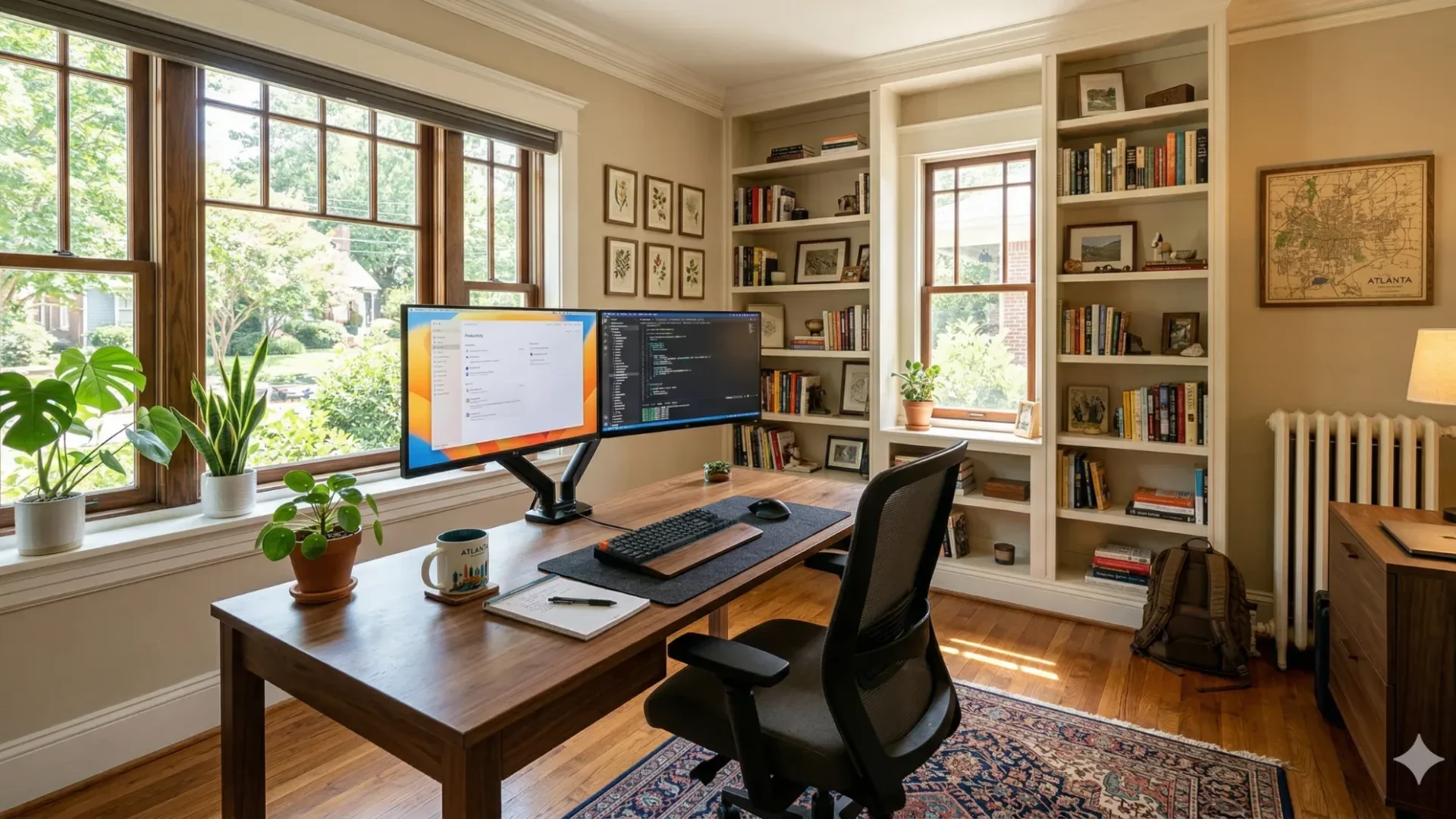
What Remote Workers Actually Need, and What Atlanta Delivers
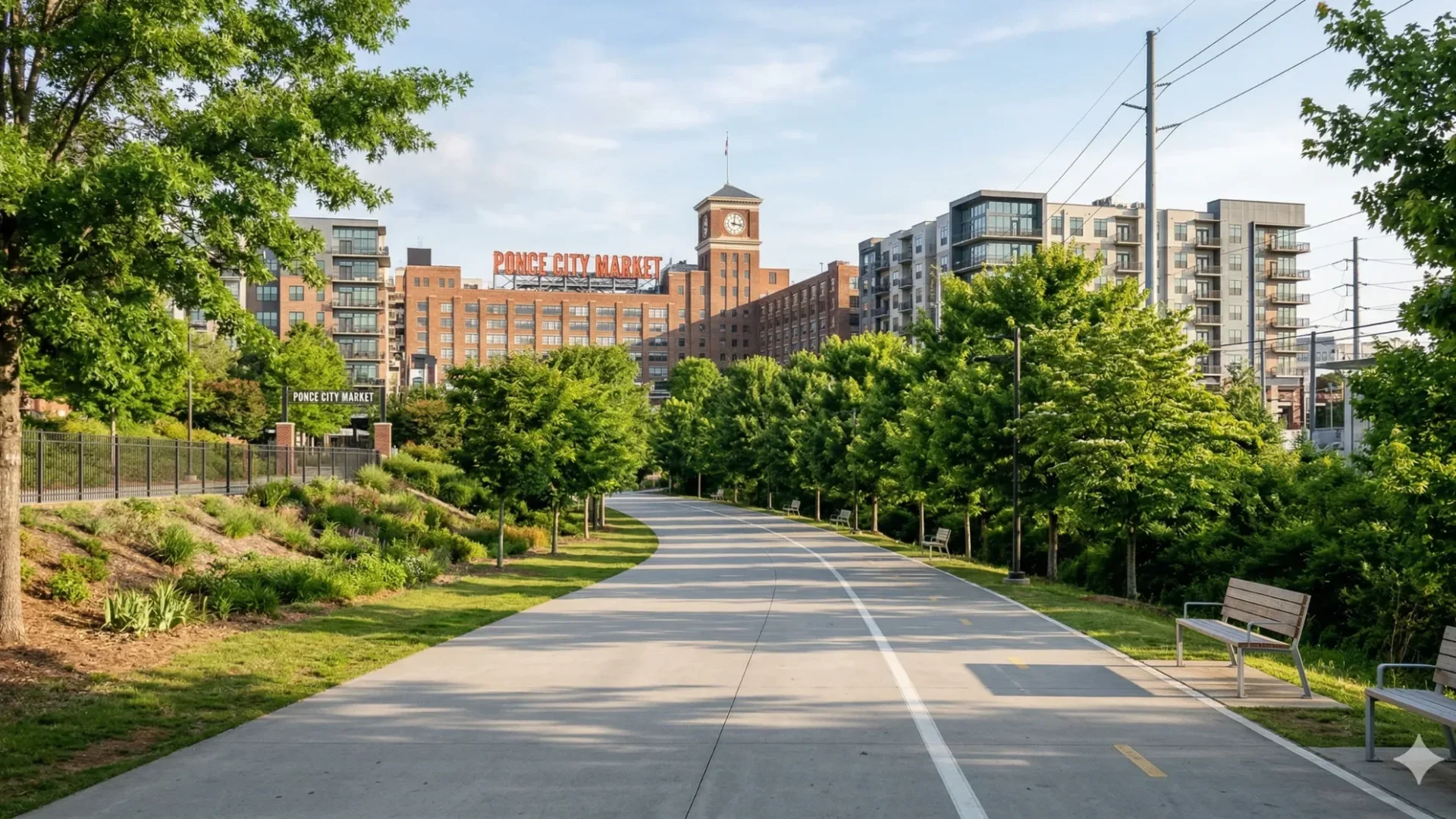
Before getting into specific neighborhoods, let’s be clear about what actually matters when your commute is a walk down the hall.
Fiber internet that works. This is non-negotiable. Atlanta has 56% fiber availability metro-wide and 87% gigabit access across the broader area. AT&T Fiber covers 65 to 75% of Atlanta neighborhoods with symmetrical speeds up to 5 Gbps. Google Fiber is available in select neighborhoods including Old Fourth Ward and Virginia-Highland at $70/month for gigabit speeds. Before you fall in love with any specific home, confirm fiber availability at that address, not just in that neighborhood generally. ISPs have block-level variability that neighborhood-level descriptions won’t capture.
A home with real office space. A dedicated room with a door, adequate light, and enough square footage to think clearly. The pandemic settled this argument: a laptop on the kitchen counter is not a home office. When I work with remote buyers, we’re looking for at minimum a three-bedroom where one room functions as a true office, or a floor plan with a bonus room or flex space that can be configured properly.
Walkable amenities within reach during the workday. The 2 PM coffee shop run, the lunchtime walk, the errand you can do on foot without getting in the car, these things define quality of life when you work from home. Atlanta’s intown neighborhoods and a handful of suburban town centers deliver this. Most of the metro does not. Know which category you’re buying into before you sign.
Access to Atlanta when you need it. Remote doesn’t always mean never in person. Client meetings, networking events, occasional office days, Hartsfield-Jackson for travel, where you live relative to those things still matters, even if it’s once or twice a week.
Quality of life outside working hours. Parks, trails, restaurants, things to do on a Tuesday evening. Atlanta has this in abundance, but it’s concentrated in specific corridors, not distributed across the geography.
The Best Atlanta Neighborhoods for Remote Workers in 2026
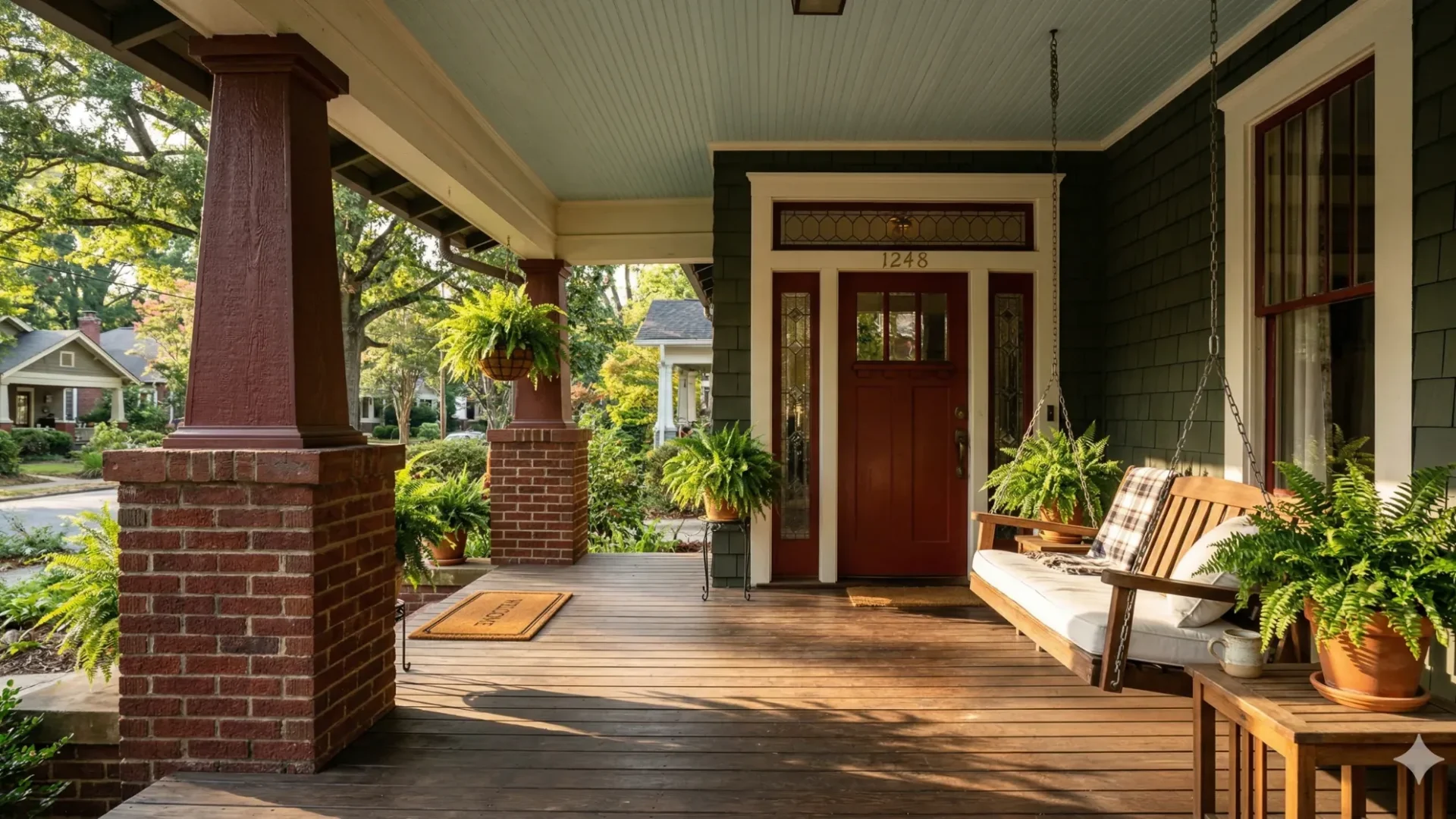
Old Fourth Ward
Old Fourth Ward is the strongest intown option for remote workers who want to be fully embedded in Atlanta’s walkable urban fabric. The BeltLine’s Eastside Trail runs directly through the neighborhood, giving you miles of trail access for midday runs, walks, and bike rides, the kind of movement break that makes working from home sustainable rather than sedentary. Ponce City Market is walkable from most of the neighborhood: a full day’s worth of coffee options, lunch spots, retail, and low-key ambient energy that’s useful when you need to work somewhere other than your desk.
Fiber is strong here. Google Fiber serves much of Old Fourth Ward, and AT&T Fiber coverage is solid. Walk Score runs around 82, which is high for Atlanta and genuinely functional for daily errands. Home prices range from the $400,000s for condos and smaller single-family homes to $700,000s and above for larger renovated properties.
The practical note: Old Fourth Ward is dense, parking requires management, and the BeltLine brings consistent foot traffic and weekend energy that some buyers love and others find excessive. Know which one you are before you buy here.
Strengths: maximum walkability, BeltLine trail access, and full intown Atlanta energy within walking distance.
Kirkwood and East Lake
Kirkwood gives you a quieter version of the intown experience, tree-lined streets, a walkable stretch on Hosea Williams Drive with coffee shops and local restaurants, and Pullman Yards as a nearby entertainment destination. East Lake sits directly adjacent with Drew Charter School as a significant community anchor and the East Lake Golf Club providing genuine green space within the neighborhood.
Fiber availability is good, both AT&T Fiber and Google Fiber reach parts of the area. Walk Scores run in the low-to-mid 70s. Home prices range from $450,000 to $750,000+ depending on size and renovation level, with real architectural character across the housing stock.
Strengths: intown Atlanta character and walkability with slightly more residential scale than Old Fourth Ward.
Decatur (City of Decatur)
The City of Decatur functions less like a suburb and more like a walkable small city adjacent to Atlanta. The downtown square on Ponce de Leon Avenue is genuinely walkable: independent bookstores, coffee shops including Dancing Goats and Open Hand Cafe, restaurants, and a Saturday farmers market. MARTA rail connects you to Midtown and Downtown Atlanta in about 20 minutes without a car, meaningful if you have regular in-person obligations.
Fiber coverage is strong, AT&T Fiber reaches most of the city. Walk Score for core Decatur runs in the low-to-mid 70s with higher scores immediately around downtown.
The trade-off is price. Decatur’s walkability, schools, and quality of life have driven values up consistently. Median home prices in the City of Decatur run $600,000 to $800,000 and above, and inventory is constrained. If you’re finding something in Decatur that looks underpriced, understand why before you write the offer.
Strengths: a complete walkable town center, MARTA access, and urban sensibility with neighborhood scale, and have the budget for it.
Virginia-Highland

Virginia-Highland is one of Atlanta’s most walkable intown neighborhoods, with coffee-shop culture woven into its commercial strips. The Virginia Avenue commercial corridor has a concentration of independent coffee shops, Land of a Thousand Hills, Alon’s Bakery, San Francisco Coffee, that function as reliable work-from-home second offices.
Google Fiber serves Virginia-Highland, making this one of the neighborhoods with the strongest and most affordable gigabit fiber options in the city. AT&T Fiber is also available. Walk Score runs in the mid-70s to low 80s depending on exact location within the neighborhood.
Homes here are primarily historic bungalows and Craftsmans, with prices ranging from $600,000 to well above $1 million for larger renovated properties. It’s not a budget neighborhood, but for remote workers prioritizing walkability and neighborhood character, the daily experience holds up.
Strengths: walkable coffee shop culture, Google Fiber, intown character, and a neighborhood that feels genuinely residential even at high density.
Smyrna
Smyrna is the most underrated option on this list for remote workers who need more space and a lower price point without surrendering all walkability. The Market Village area in downtown Smyrna is a genuine walkable town center, restaurants, a farmers market, green space, and local retail accessible on foot for residents in the core of the city.
Proximity is Smyrna’s structural advantage: 15 to 20 minutes to Midtown, 20 to 25 minutes to Buckhead, and reasonable access to the Cumberland and Galleria employment corridors if you have a client base out that way. AT&T Fiber covers most of Smyrna with solid reliability. Home prices run $400,000 to $600,000 for single-family homes with real square footage, meaningfully more space per dollar than intown options at similar quality levels.
Strengths: more space and better price per square foot, a walkable town center, and easy access to both intown Atlanta and the northwest suburban employment corridor.
Alpharetta
If fiber internet and home size are your top two priorities, Alpharetta belongs at the top of this list. The GA-400 technology corridor has driven significant infrastructure investment throughout the city, fiber availability is among the highest in the metro and internet reliability is consistently strong. The Avalon development gives you a walkable, well-appointed town center with restaurants, coffee shops, retail, and coworking options that function as genuine alternatives to a home office when you need a change of scene.
The commute reality: GA-400 south toward Buckhead and Midtown runs 40 to 60 minutes during peak hours. Manageable once or twice a week on a flexible schedule. A significant commitment if you’re hybrid with set days and set start times. Be honest about your actual schedule before you choose North Fulton.
Home prices start in the $550,000s and run well into the $700,000s and above for single-family homes with adequate office space. You get significant square footage and newer construction quality, and genuine fiber infrastructure to match.
Strengths: fiber reliability, newer homes with built-in office space, and a polished suburban town center, with budget for North Fulton pricing.
Roswell
Roswell sits between Alpharetta’s polished infrastructure and Smyrna’s value proposition, and for many remote workers it’s the right landing spot. Downtown Roswell on Canton Street is a genuinely characterful restaurant and coffee shop corridor with local feel that Alpharetta’s Avalon doesn’t quite replicate. The Chattahoochee River National Recreation Area provides outdoor access for midday breaks that matters more than it sounds when you work from home every day.
Fiber coverage is solid throughout most of Roswell, AT&T Fiber reaches most of the city. Home prices are somewhat more accessible than Alpharetta, generally ranging from $500,000 to $700,000+ for single-family homes with real office space. Commute dynamics are similar: 30 to 50 minutes to Midtown in normal traffic.
Strengths: North Fulton quality of life with slightly more neighborhood character and slightly more accessible pricing than Alpharetta.
West Midtown
West Midtown is the option for remote workers who want maximum urban proximity, close to Midtown’s employment base, walkable to restaurants, and with an industrial-to-residential character that remote workers who previously lived in Brooklyn or Denver often find familiar and energizing.
Coworking infrastructure is strong here, Industrious, WeWork, and independent spaces are concentrated along the Howell Mill and Marietta Street corridors. When you need to get out of the house and work somewhere professional, West Midtown has options within a short drive or rideshare. Ponce City Market, Monday Night Brewing, Octane Coffee, and the Chattahoochee Food Works are all accessible. AT&T Fiber coverage is solid. Home prices vary by product type: condos and townhomes start in the $400,000s, while single-family homes run $500,000 to $800,000+.
Strengths: urban proximity, strong coworking access, and industrial-residential neighborhood character at an intown price point.
A Realistic Note on Atlanta Traffic
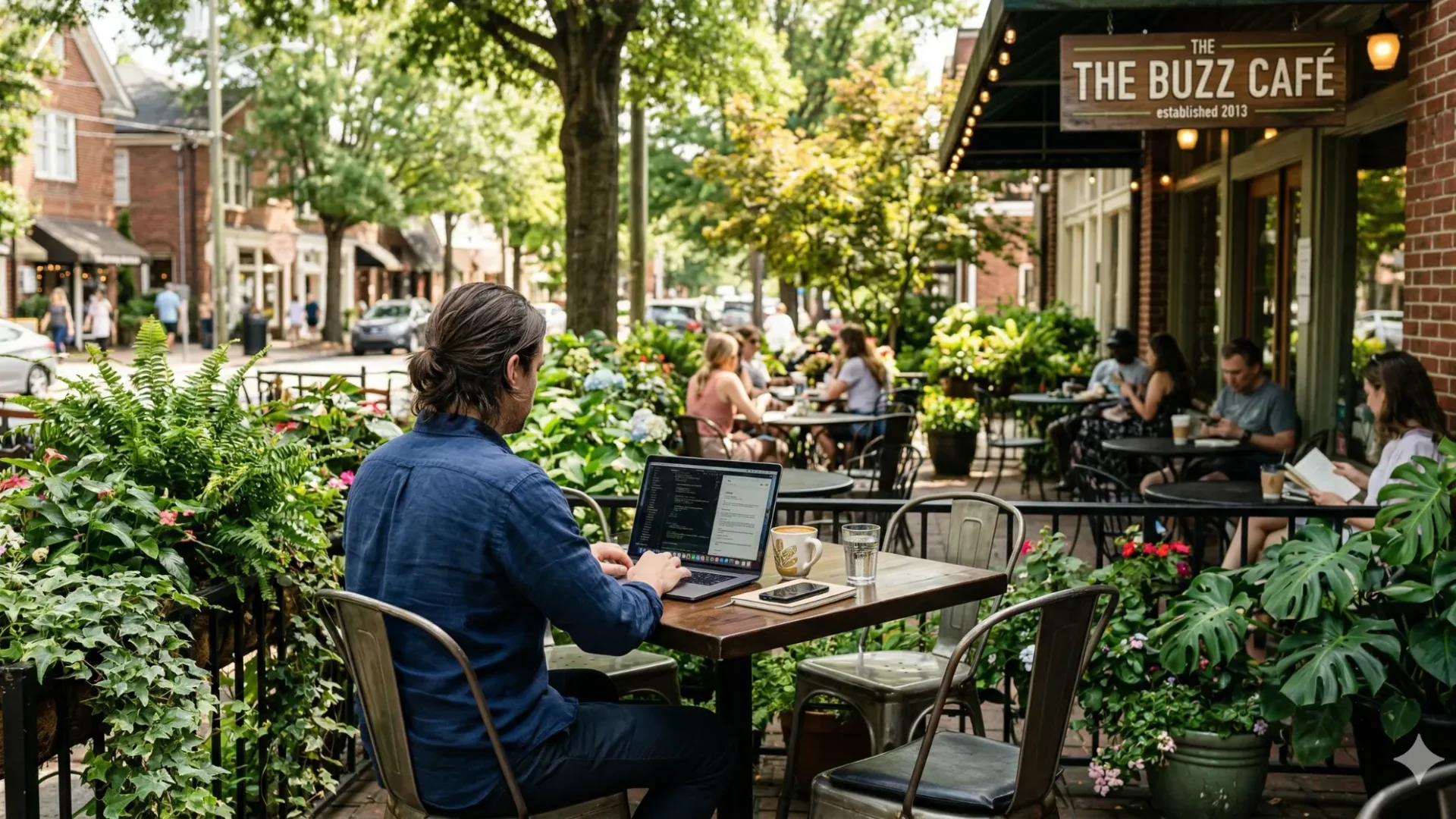
Remote work reduces commute frequency, it doesn’t eliminate the commute. And in Atlanta, frequency matters because traffic is genuinely significant on the major corridors.
GA-400 south from Alpharetta or Roswell to Midtown during a 7 to 9 AM window runs 45 to 60 minutes on a normal day. I-285 to I-75 north toward Smyrna and East Cobb is more predictable but still congested during peak windows. Intown corridors, I-20, I-75/85 through downtown, have their own friction, though MARTA mitigates that for Decatur and neighborhoods with rail access.
If your remote schedule gives you real flexibility to time in-person days outside peak windows, the commute calculus changes considerably. If you’re hybrid with set office days and a set start time, model your commute on those specific days before you commit to a neighborhood 45 miles from where you’ll be sitting at 9 AM on a Tuesday.
What to Look for in the Home Itself
The neighborhood choice and the home choice are both real decisions, and remote workers need to get both right.
The office. A dedicated room with a door. Not a loft, not a corner of the living room. A room with adequate natural light, enough square footage for a real desk setup and a bookshelf, and a door you can close on a client call. If you’re looking at a three-bedroom home, understand which room becomes your office and make that choice consciously, not by default.
The connection. Confirm fiber availability at the specific property address before you’re under contract. Neighborhoods described as having “good internet” can have address-level variability. Check the ISP’s own lookup tool at the specific address before you finalize anything.
The outdoor space. A yard, a porch, or a balcony, something that gives you somewhere to be outside during the workday without getting in a car. Remote workers consistently cite outdoor access as a quality-of-life factor they underweighted when making their housing decisions.
The layout. Open-concept floor plans that felt appealing when buyers were rarely home have become less attractive to people who spend most of their waking hours in that space. A layout with separation between work and living areas, the home office away from the main social spaces, matters more when you’re there all day.
Frequently Asked Questions
Long-term remote workers tend to settle in neighborhoods that combine fiber internet, walkability, and home office space. The most popular long-term picks include Old Fourth Ward, Virginia-Highland, and Decatur for intown buyers, and Smyrna, Alpharetta, and Roswell for suburban buyers who want more square footage. The right fit depends on your budget, commute frequency, and how much walkable amenity you want during the workday.Does Atlanta really have good fiber internet?
Google Fiber is available in select intown neighborhoods including Old Fourth Ward, Virginia-Highland, and parts of East Atlanta. Check Google Fiber’s address lookup directly for current availability at any specific property.
Atlanta ranked first among U.S. cities for remote workers in CoworkingCafe’s 2026 analysis, based on coworking density (119 spaces metro-wide), remote workforce share (25.6%), fiber infrastructure, and cost of living relative to comparable cities. Housing costs run roughly 30% below coastal tech hub cities while delivering comparable infrastructure and a strong quality-of-life offer.
Coworking rates in Atlanta average around $199 per month for open workspace and dedicated desk options, competitive nationally and well below rates in New York, San Francisco, or Austin. Options are concentrated in Midtown, Buckhead, West Midtown, and Alpharetta, with smaller locations scattered across intown neighborhoods.
Alpharetta has the strongest and most consistent fiber infrastructure of the suburban options, driven by the GA-400 tech corridor. Roswell and Smyrna also have solid AT&T Fiber coverage throughout most of each city. For intown options, Old Fourth Ward and Virginia-Highland both have Google Fiber alongside AT&T Fiber.
At minimum, a dedicated room that functions as a true home office, separate from bedrooms and living areas, with adequate light and a door. In practical terms, that typically means a three-bedroom minimum for singles or couples, or a four-bedroom for families. Bonus rooms, flex spaces, and finished basements all work well. What doesn’t work long-term: an open-concept two-bedroom with a desk in the corner.
By Walk Score: Midtown (87), Old Fourth Ward (82), Virginia-Highland (mid-70s to low 80s), Kirkwood (low 70s), and downtown Decatur (mid-70s). For suburbs, downtown Smyrna’s Market Village and downtown Alpharetta near Avalon provide genuine walkable town centers. Most of the broader metro is car-dependent for daily needs, walkability is concentrated in specific corridors.
It depends on where your office would be and which suburb you’re considering. Smyrna at 15 to 20 minutes from Midtown makes hybrid genuinely manageable. Alpharetta at 45 to 60 minutes in peak traffic makes it a significant recurring commitment. Think through your realistic hybrid scenario before you commit to how far out you’re willing to go, not just your current fully-remote situation.
Keep reading
Written by
Kristen D. Johnson, REALTOR
Metro Atlanta, intown and out. Grew up in East Point, lives in Edgewood, and has worked both sides of the perimeter long enough to know where the map lies to you.
Work with Kristen Johnson Real EstateThinking about a move in Metro Atlanta?
Tell me what you are weighing up and I will tell you what I would do, in plain terms, before you commit to anything.