Atlanta Neighborhoods
Living in Vine City Atlanta GA: MARTA Rail, MLK’s Last Home & Home Prices 2026
A 2026 guide to Vine City: MARTA rail access, the Martin Luther King Jr. home site, and what homes cost on the Westside.
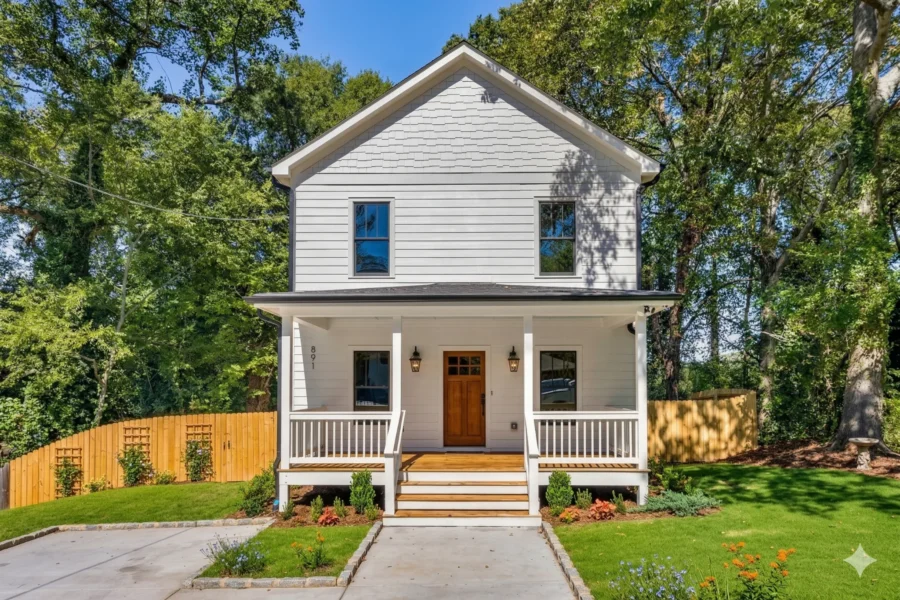
Vine City sits about a mile and a half west of Five Points, inside the City of Atlanta, directly in the shadow of Mercedes-Benz Stadium. If you’re driving in from I-20 or I-285, the stadium announces itself well before you see the neighborhood behind it. That’s actually part of what makes Vine City such a complicated place to evaluate as a buyer: the most visible thing about it from the outside is not what defines it from the inside.
What defines Vine City is its history, specifically, its history as one of Atlanta’s most significant African American neighborhoods, a place where Alonzo Herndon built his home after becoming Atlanta’s first Black millionaire, where Martin Luther King Jr. lived from 1966 until his assassination in 1968, where Coretta Scott King stayed until 2004, where Julian Bond and Maynard Jackson were neighbors. That history is not incidental context for a real estate post. It is the neighborhood. Understanding it is the only honest way to understand what you’re looking at when you evaluate a home here.
I work with buyers across Metro Atlanta, and Vine City comes up in a specific kind of conversation: buyers who want intown Atlanta at entry-level prices, with direct MARTA rail access, close to the city’s core employment and entertainment infrastructure. It is a real option for that buyer. It also comes with real considerations that deserve straight talk.
Nearly a decade helping Atlanta buyers means I know what the data doesn’t show.
Here’s what you need to know.
What Is Vine City, and Where Is It?
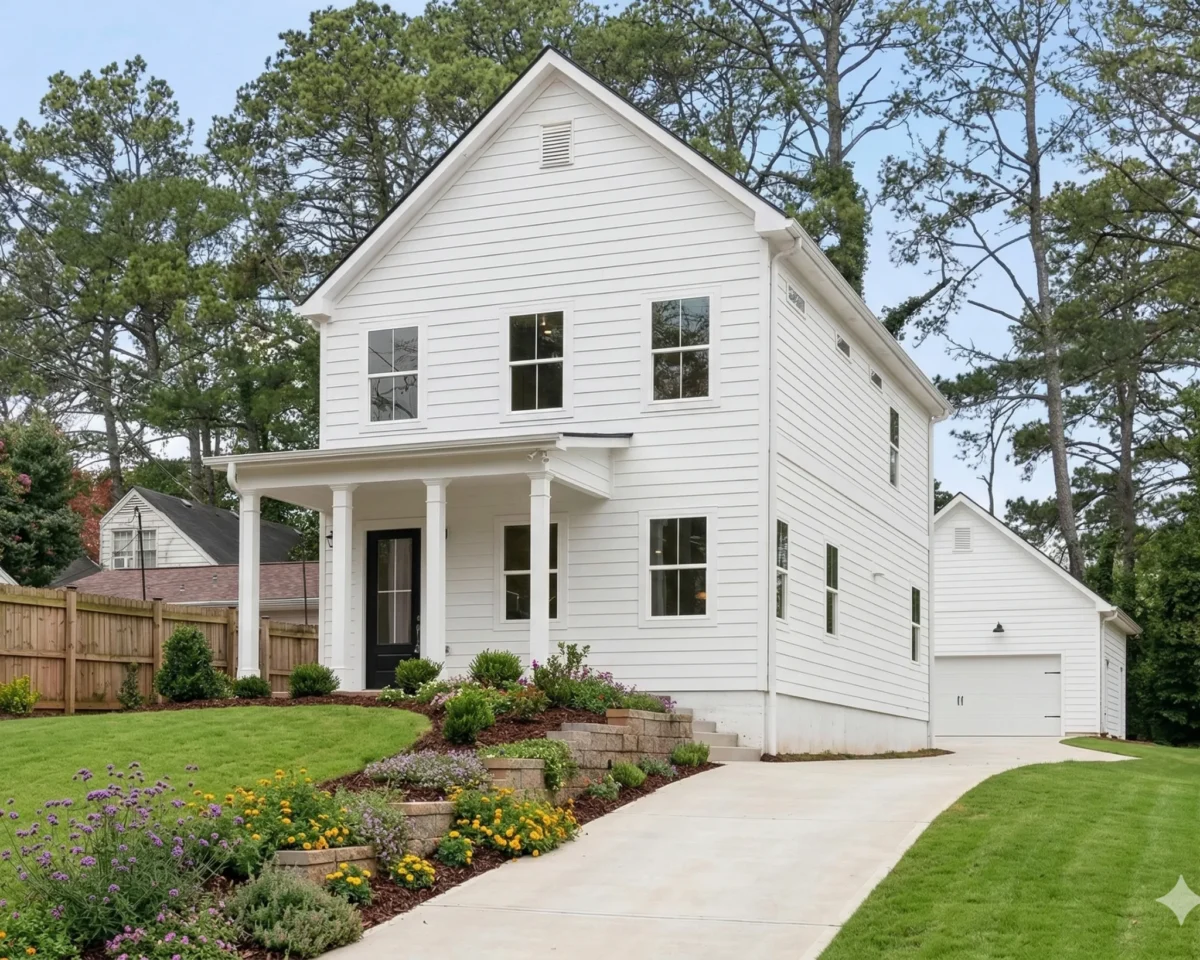
Vine City is a residential neighborhood in the City of Atlanta, bounded roughly by Northside Drive to the east, Joseph E. Lowery Boulevard (Ashby) to the west, Joseph E. Boone Boulevard (formerly Simpson Street) to the north, and Martin Luther King Jr. Drive to the south. It’s a compact neighborhood, walkable end to end, sitting inside the perimeter and just west of downtown.
It is served by the Vine City MARTA Station (Blue and Green lines) at the corner of Rhodes Street NW and Carter Road, and by the Ashby MARTA Station (Blue and Green lines) on Joseph E. Lowery, which technically sits on the neighborhood’s western edge. Having two MARTA rail stations within reasonable walking distance is genuinely unusual, most Atlanta neighborhoods have one or none. That transit access is one of Vine City’s most significant assets for buyers who commute by rail.
Mercedes-Benz Stadium is directly east, across Northside Drive. The Georgia World Congress Center and State Farm Arena are equally close. The Atlanta University Center, the cluster of five HBCUs that includes Morehouse, Spelman, and Clark Atlanta University, is adjacent to the south and west. These are not amenities you’re “near.” They are immediately adjacent. The practical implications of that proximity are real: on Falcons or Atlanta United game days, parking pressure and traffic spill directly into Vine City’s streets. On quiet weekday mornings, the neighborhood is a short walk from some of the most storied academic institutions in American history.
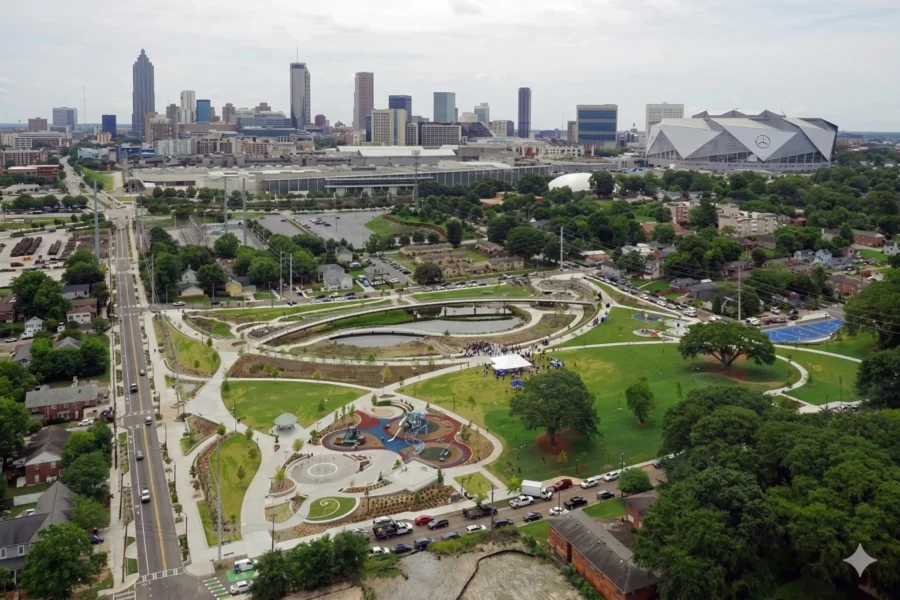
Rodney Cook Sr. Park, 16 acres, opened 2021, designed partly as a stormwater retention system to address Vine City’s long-standing flooding history, sits on Vine Street NW and has become the neighborhood’s most significant new community amenity in a generation.
The History You Need to Know
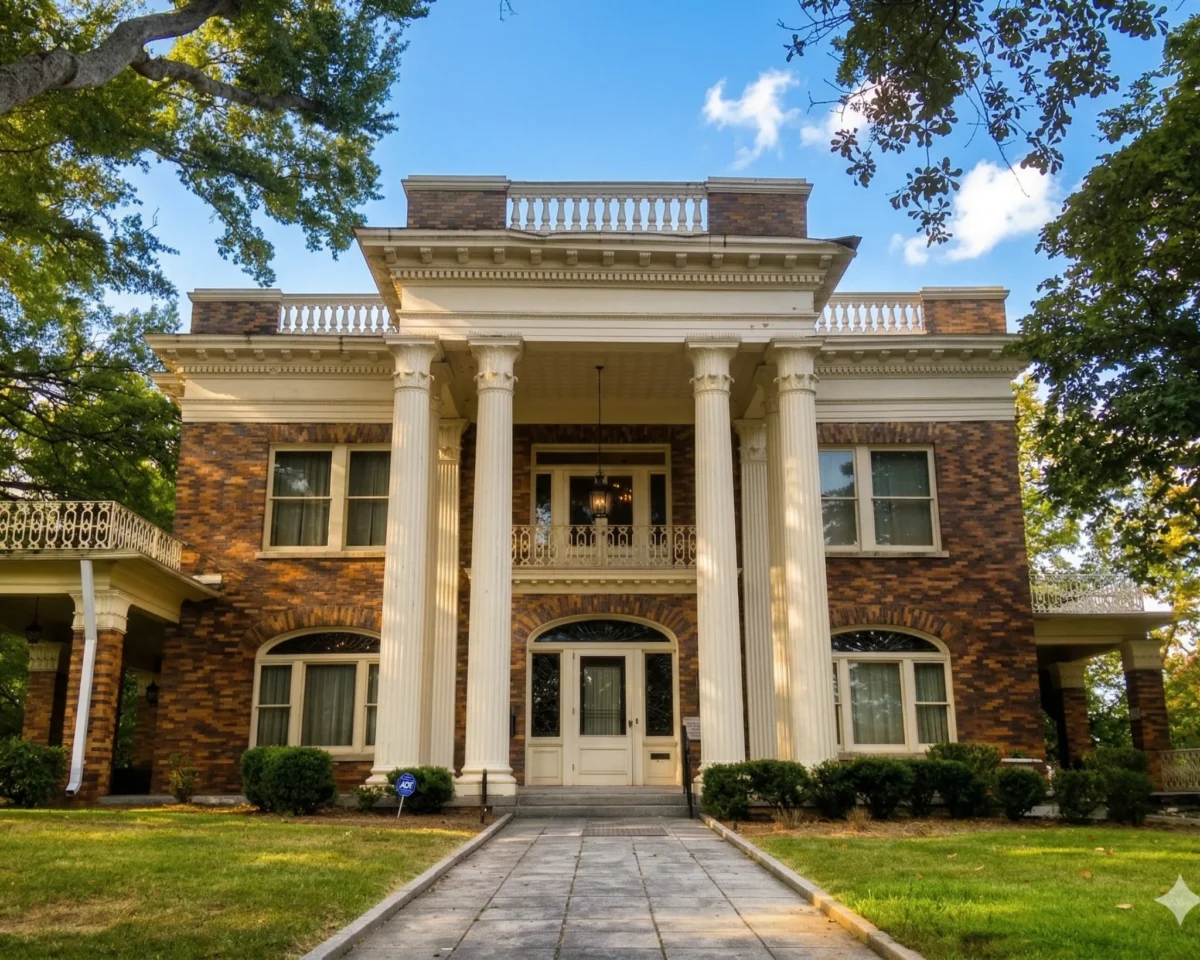
Vine City emerged in the late 1800s as a predominantly African American residential neighborhood, one of the first in Atlanta to develop a stable, mixed-class Black community at a time when that was systematically made difficult everywhere else in the city. Alonzo Herndon, born enslaved in 1858, founder of the Atlanta Life Insurance Company, and by his death in 1927 one of the wealthiest Black Americans in the country, built his Beaux Arts home at 587 University Place in 1910. That house still stands and is open to visitors today.
The Great Atlanta Fire of 1917 displaced thousands of Black Atlantans from other parts of the city, and many resettled in Vine City. Through the 1940s and 1950s, the neighborhood functioned as a middle-class African American community, home to professionals, civic leaders, and activists. Paschal’s Restaurant, which opened in 1947 on West Hunter Street (now MLK Jr. Drive), became one of the most important gathering places in Atlanta’s civil rights movement, a place where King, Andrew Young, John Lewis, Julian Bond, and other movement leaders strategized and organized.
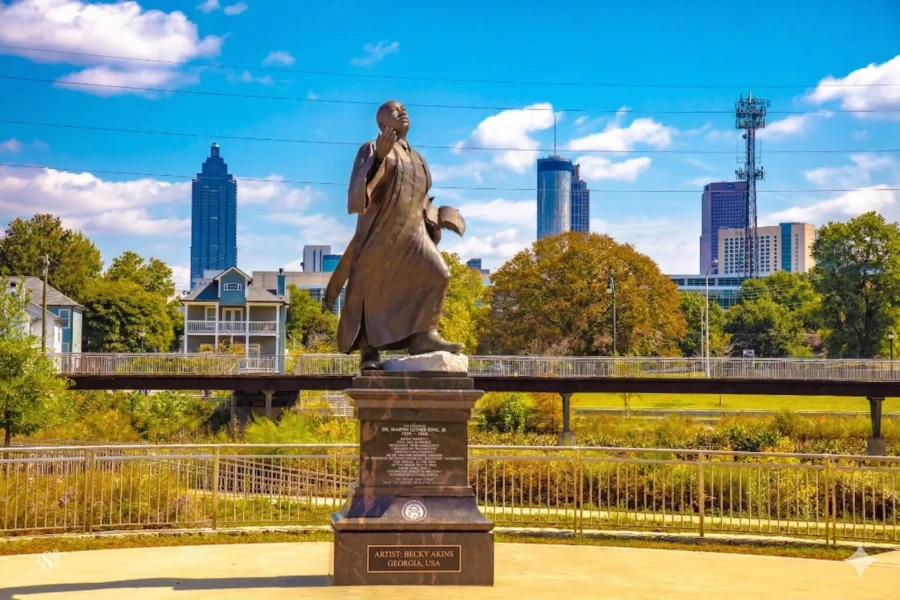
In 1966, Martin Luther King Jr. purchased a four-bedroom home at 234 Sunset Avenue in Vine City. He lived there with his family for the remaining two years of his life, commuting between Atlanta and Memphis, Chicago, and Washington as he expanded the Poor People’s Campaign and the work of the Southern Christian Leadership Conference. After his assassination in April 1968, Coretta Scott King remained in the home, launching the King Center for Nonviolent Social Change from its basement. She lived on Sunset Avenue until 2004.
The neighborhood’s trajectory after the 1960s followed a pattern common to many intown Atlanta communities: suburbanization drained middle-class residents, disinvestment followed, public housing deteriorated, and the construction of the Georgia Dome in 1992 displaced additional residents and fractured the neighborhood’s western edge. By the 1980s and 1990s, Vine City had become one of the most disinvested communities in the city.
The current moment is one of active, if uneven, reinvestment. The Westside Future Fund, a nonprofit backed by public, private, and philanthropic partners, has reduced blighted properties by 50 percent in the Vine City/English Avenue area since 2017 and delivered more than 270 affordable rental units. Rodney Cook Sr. Park represents $45 million in public investment. And in early 2026, Invest Atlanta’s board approved a major redevelopment proposal for an 8-acre site at 50 Sunset Avenue and 41 Griffin Street, adjacent to Morris Brown College, that would bring a boutique hotel, 215 housing units, a 30,000-square-foot innovation facility, and neighborhood-serving retail. That project is in early stages, but its approval signals the scale of institutional investment now directed at this corridor.
That’s the honest framing: Vine City is a neighborhood with deep roots, a documented history of disinvestment, and active revitalization underway. Buyers who understand that context are better positioned to evaluate what they’re buying.
What Does Vine City Cost? Home Prices in 2026
Vine City is one of the most affordable intown Atlanta neighborhoods by median sale price, though the market is thin and individual transactions vary significantly.
What the data shows:
-
Median sale price: approximately $186,000, $220,000 based on recent trailing data (Redfin reports $186K median for late 2025)
-
Price per square foot: approximately $220, $305 depending on property type and condition, the wide range reflects a small sample size and significant variation between unrenovated and renovated properties
-
Days on market: approximately 74 days, up significantly from prior years, reflecting the broader Atlanta market normalization
-
Transaction volume: very low, in some months, only 3 to 6 homes sell in Vine City proper, which means any single outlier transaction skews the median significantly
What the data doesn’t show: Vine City’s market data is notoriously unstable because the transaction volume is so low. A single renovated property selling at $350,000 or a distressed property selling at $90,000 can move the monthly median by tens of thousands of dollars. The numbers you see on Redfin or Zillow for Vine City are directional, not definitive. Use them as a starting point, not a conclusion.
Price tiers in practice:
Under $150,000: Exists, primarily for distressed, significantly deteriorated, or heavily deferred-maintenance properties. These require substantial renovation budgets, treat the purchase price as only part of the real cost.
$150,000, $250,000: The core of the current Vine City single-family market. Older brick and frame homes, typically 1,000 to 1,600 square feet, 3 bedrooms, with conditions ranging from original to partially updated. Lot sizes are modest. Many of these homes have been through multiple investor hands in the last decade.
$250,000, $380,000: Renovated single-family homes and newer infill construction. At this price point you’re competing with buyers in West End, Adair Park, and Sylvan Hills, and the comparison shopping becomes relevant.
$380,000+: The top of the Vine City market, representing fully renovated homes with modern finishes, some new construction, and the handful of higher-end properties in the neighborhood. Thin inventory at this tier.
Data sourced from Redfin, Zillow, and GAMLS for the 2025 to 2026 period. Vine City’s low transaction volume makes any single data source unreliable. Contact me at kristenjohnsonrealestate.com for current comps before making any offer.
Getting Around: Commute from Vine City
Vine City’s transit access is among the best of any intown Atlanta neighborhood at this price point. That’s a meaningful statement worth unpacking.
MARTA Rail: The Vine City Station (Blue and Green lines) is in the heart of the neighborhood on Rhodes Street NW. The Ashby Station (Blue and Green lines) is on Joseph E. Lowery Boulevard at the neighborhood’s western edge. Both serve the same two lines. From either station:
-
Five Points / Downtown Atlanta: 2 stops, approximately 5 to 7 minutes by rail
-
Midtown (Arts Center Station): approximately 15 to 18 minutes by rail via transfer at Five Points
-
Hartsfield-Jackson Airport: approximately 25 to 30 minutes by rail from Vine City Station, with no transfer, the Blue Line runs directly to the airport
-
Buckhead (Lenox Station): approximately 25 minutes via Red or Gold line from Five Points transfer
The airport connection deserves emphasis. For buyers who travel frequently for work, Vine City’s straight-shot rail connection to Hartsfield-Jackson is a genuine quality-of-life advantage that most intown neighborhoods, even more expensive ones, don’t have in the same way.
By car:
-
Downtown Atlanta: 5 to 10 minutes off-peak, 15 to 25 minutes during morning rush via I-20 East or Northside Drive
-
Midtown: 10 to 15 minutes off-peak; 20 to 30 minutes in traffic
-
West Midtown / Marietta Street corridor: 5 to 10 minutes
-
Hartsfield-Jackson Airport: 18 to 22 minutes via I-20 West to I-285 South, one of the faster airport commutes from any intown neighborhood
-
Buckhead: 20 to 30 minutes depending on traffic on I-75/85 North
Game day and event caveat: Mercedes-Benz Stadium hosts Falcons games, Atlanta United matches, college football playoff events, and major concerts. On those days, Northside Drive and the streets immediately east of Vine City become severely congested. MARTA is the practical solution for residents on event days, the Vine City Station serves as an overflow station for stadium traffic, and the trains run reliably. If you’re driving, plan accordingly.
Things to Do In and Near Vine City
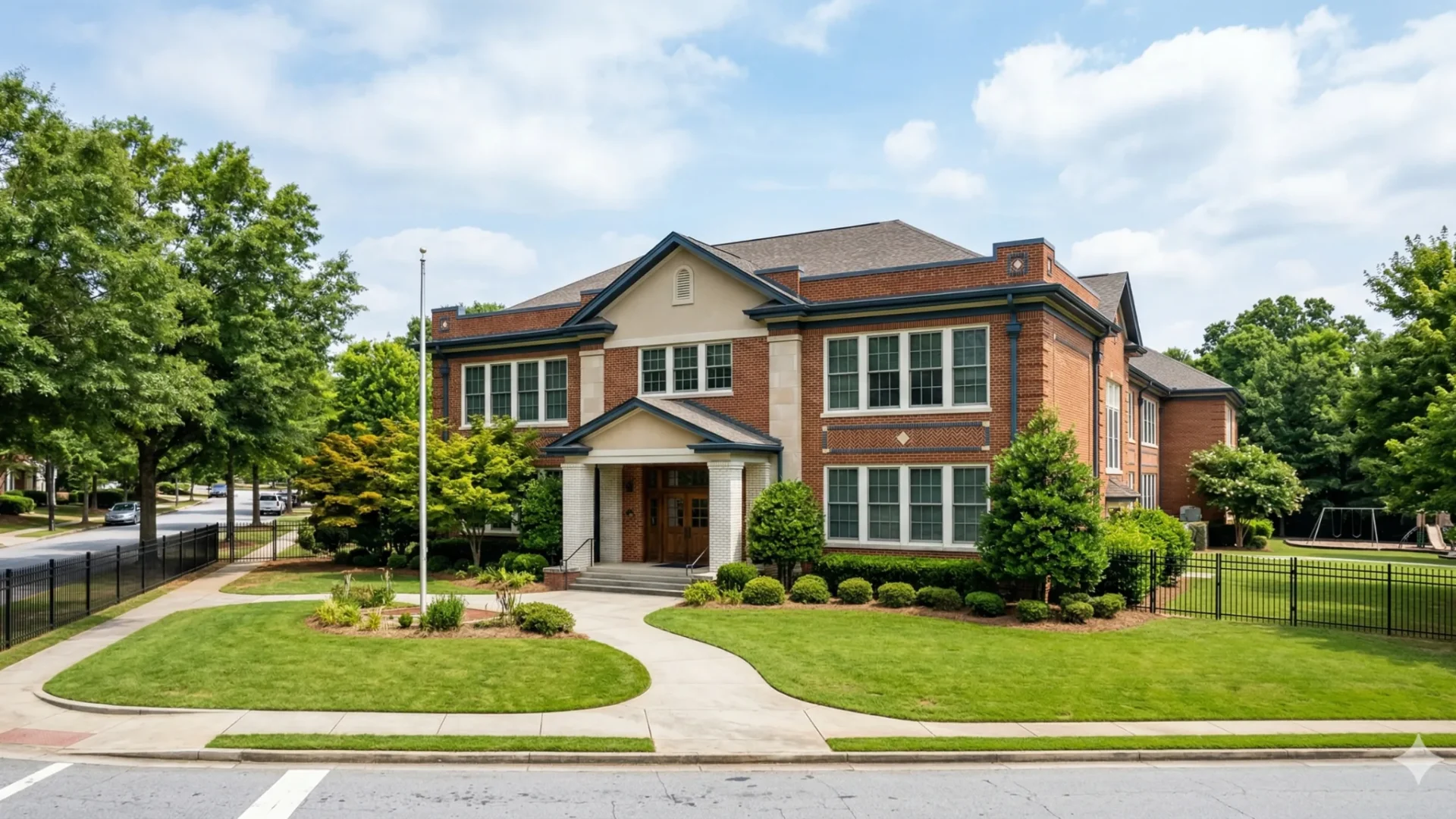
Vine City itself does not have a developed commercial corridor. There is no walkable strip of coffee shops, restaurants, and boutiques within the neighborhood boundaries. The things to do story for Vine City is mostly about proximity, what’s a short walk or drive away.
Busy Bee Café (810 Martin Luther King Jr. Drive SW), One of Atlanta’s most historically significant restaurants, open since 1947. James Beard recognized. Michelin listed. Famous for fried chicken and soul food sides. Martin Luther King Jr. ate here. Kamala Harris ate here. The lines are worth it.
Rodney Cook Sr. Park (Vine Street NW), The neighborhood’s centerpiece park, opened 2021. Sixteen acres with a 10-million-gallon stormwater pond, playground, splash pad, amphitheater, and winding trails connecting to the broader PATH network. Built specifically to address Vine City’s long-standing flooding problem while creating genuine greenspace. Worth visiting before you decide whether to buy here.
The Herndon Home (587 University Place NW), Alonzo Herndon’s 1910 Beaux Arts home is a National Historic Landmark and open for tours. If you’re evaluating Vine City seriously, visit. Understanding what this neighborhood was helps you understand what it’s becoming.
Mercedes-Benz Stadium: Home of the Atlanta Falcons and Atlanta United, steps from Vine City’s eastern edge. Concerts, college football, soccer, and other major events year-round. For buyers who attend events regularly, walking distance to the stadium is a real perk. For buyers who don’t, game-day traffic and noise are real considerations.
Washington Park: Just west of Vine City, Atlanta’s first planned Black suburb features tennis courts and a heated, competition-sized indoor pool. One of the underrated neighborhood amenities in this part of the city.
West Midtown and Marietta Street corridor: 5 to 10 minutes by car. Monday Night Brewing, Westside Provisions District, Companion, and the broader West Midtown restaurant and bar scene are easily accessible.
The Atlanta University Center: Morehouse College, Spelman College, Clark Atlanta University, Morehouse School of Medicine, and Morris Brown College are immediately adjacent to Vine City. The AUC Shuttle provides free service between the Vine City MARTA Station and the campuses.
Schools in Vine City
Vine City is zoned to Atlanta Public Schools.
Elementary: Michael R. Hollis Innovation Academy (PK, 8) serves Vine City students through 8th grade as a combined elementary and middle school. Hollis is a public school with a STEAM-focused curriculum.
High School:Booker T. Washington High School (45 Whitehouse Drive SW, Atlanta, GA 30314) serves grades 9 to 12. Established in 1924, Washington High was Georgia’s first public high school for African American students, one of the most historically significant schools in the state. The school’s history is inseparable from Atlanta’s civil rights story.
Charter option: Centennial Academy, a public charter school, is accessible to Vine City families through Atlanta Public Schools’ school choice process.
Atlanta Public Schools offers school choice and magnet options across the district. Families in Vine City can apply through APS’s open enrollment process for programs beyond their zoned attendance schools.
Research and visit schools to determine fit for your family. Always verify attendance zone assignment by specific property address before making decisions based on school zoning.
How Vine City Compares to Nearby Neighborhoods
Vine City vs. West End West End is directly south and sits on the BeltLine Westside Trail, giving it direct trail access that Vine City doesn’t have. West End has a more developed commercial corridor along Lee + White and Ralph David Abernathy, more renovation activity, and higher prices, renovated homes regularly list in the $300,000, $450,000+ range. Vine City has more direct MARTA rail access (two stations vs. one) and lower entry prices. If BeltLine access is the priority, West End wins. If MARTA access and price are the priority, Vine City deserves a close look.
→ Living in West End Atlanta GA
Vine City vs. Collier Heights Collier Heights is several miles northwest, with a completely different character, larger lots, architecturally significant mid-century brick ranches, National Historic District status, and no MARTA rail access. Prices are comparable at the entry level. Collier Heights is the right choice if lot size, architectural character, and historic designation matter more than transit access. Vine City is right if you need rail and want to be close to the city’s core.
→ Living in Collier Heights Atlanta GA
Vine City vs. English Avenue English Avenue is immediately north of Vine City, sharing a similar price range and investment stage. English Avenue has been the focus of the Westside Future Fund’s largest recent project, the 120-unit North + Oliver development, and has arguably seen more concentrated new housing investment in recent years. The two neighborhoods are often evaluated together, and buyers looking at one should look at the other. The practical differences are subtle, English Avenue is slightly further from the MARTA station and closer to some of the BeltLine’s western trail access points.
Vine City vs. Mechanicsville Mechanicsville is south of downtown along the BeltLine Southside Trail corridor. Also affordable, also historically African American, also seeing investment driven partly by BeltLine proximity. Mechanicsville has stronger trail access than Vine City; Vine City has stronger MARTA rail access than Mechanicsville. Different transit priorities lead to different choices here.
Streets and What You’ll Find in Vine City
Vine City’s residential streets are compact, with mostly smaller lots and housing stock that runs primarily from the 1930s through the 1960s. Brick bungalows and frame homes dominate. Some infill construction has appeared, particularly in the blocks closer to Rodney Cook Sr. Park.
Sunset Avenue NW: The neighborhood’s most historically significant street. MLK’s former home at 234 Sunset is here, alongside other older residential properties. The street has a mix of original homes and some renovation activity.
Vine Street NW: Runs east-west through the center of the neighborhood, directly adjacent to Rodney Cook Sr. Park. The park’s presence has made this corridor more active and is beginning to attract renovation interest.
Griffin Street NW: Part of the redevelopment zone near Morris Brown College and the proposed Invest Atlanta project. Expect significant change in this corridor over the next several years as the approved development moves forward.
Northside Drive corridor (eastern edge): Borders the stadium and GWCC. Commercial and transitional uses dominate this edge. Not where you want to be for quiet residential living, but proximity to the stadium and the MARTA station makes nearby blocks logistically convenient.
Maple Street NW and surrounding blocks: Mid-neighborhood residential streets with a mix of older original homes and renovated properties. More intact residential character away from the stadium edge.
The honest word on housing condition: a meaningful portion of Vine City’s existing housing stock has deferred maintenance accumulated over decades. Unrenovated homes here require real investment, and buyers should budget for inspection findings rather than assuming move-in ready. The homes that have been renovated are easier to evaluate at market price; the ones that haven’t require a clear-eyed cost-to-renovate analysis before the offer goes in.
What Vine City Offers, and What to Weigh
What Vine City offers:
MARTA rail access is non-negotiable. Two Blue/Green Line stations within walking distance is rare at any price point in Atlanta. For buyers who commute by rail to downtown, Midtown, or the airport, or who simply want to live car-light, Vine City’s transit infrastructure is a genuine asset.
Entry-level intown Atlanta ownership is the goal. Vine City is one of the few neighborhoods within the City of Atlanta where single-family ownership is still accessible below $250,000. That window may not stay open indefinitely as development investment accelerates.
A long investment runway and realistic renovation math. The revitalization trajectory is real, Westside Future Fund investment, the Morris Brown/Invest Atlanta project, Rodney Cook Sr. Park, but it’s measured in years, not months. Investors who underwrote correctly and can hold will likely benefit. Investors looking for a quick flip should evaluate carefully.
Proximity to Mercedes-Benz Stadium, the AUC, or downtown is a daily-life asset. If you work at or near the stadium, attend AUC events regularly, or commute downtown, Vine City’s location is hard to beat at this price point.
The option to be part of a neighborhood with genuine roots. Vine City has a specific, documented history. For buyers who care about where they live, not just what they’re paying, that matters.
Tradeoffs to weigh in Vine City:
Move-in ready without a renovation budget. A significant portion of Vine City’s available inventory needs work. If you’re not prepared to manage or fund a renovation, the search here will be frustrating.
Walkable retail and restaurants in the neighborhood are important. Vine City does not have a coffee shop, a corner bar, or a grocery store within the neighborhood boundaries. Daily errands require a car or a MARTA trip. If walkability to retail is a top priority, West End or Kirkwood will serve you better.
Game-day traffic and noise are dealbreakers. Eight to ten times a year, Mercedes-Benz Stadium fills with 70,000+ people and the surrounding streets become impassable. If that sounds like it would wear on you, factor it honestly.
The option to be further along in the revitalization curve. Vine City is earlier in its recovery than West End or Adair Park. The upside is potentially greater; so is the patience required. If you want to buy into a neighborhood that’s already there, this isn’t the right pick.
Frequently Asked Questions About Living in Vine City, Atlanta
Looking for more Metro Atlanta neighborhood guides? I’ve covered the westside and intown Atlanta including West End and Collier Heights. Browse the full guide series at kristenjohnsonrealestate.com.
Keep reading
Written by
Kristen D. Johnson, REALTOR
Metro Atlanta, intown and out. Grew up in East Point, lives in Edgewood, and has worked both sides of the perimeter long enough to know where the map lies to you.
Work with Kristen Johnson Real EstateThinking about a move in Metro Atlanta?
Tell me what you are weighing up and I will tell you what I would do, in plain terms, before you commit to anything.