Buying a Home
Who Pays Property Taxes the Year You Buy a House in Georgia?
Georgia bills whoever owned the home on January 1, but taxes are split at closing. See how proration works, who pays the fall bill, and when to file homestead.

Quick answer
In Georgia, the county bills whoever owned the home on January 1, but at closing the year’s taxes are split so the seller covers the days they owned it and you cover the rest. If the current year’s bill isn’t out yet, the closing attorney usually prorates using last year’s bill, gives you a credit from the seller, and you (or your lender’s escrow account) pay the full bill when it arrives in the fall. Your own homestead exemption won’t lower your taxes until the next tax year, and the deadline to file for it is April 1.
Planning a purchase in Metro Atlanta? Start with a plan for your budget and timing →
Who gets the tax bill after you buy?
Georgia counties tax on a calendar year, and the owner of record on January 1 is legally responsible for that year’s bill. Gwinnett County’s tax commissioner, for example, says it bills the owner of record as of January 1 for each tax year. DeKalb’s tax commissioner says that if the deed changed after January 1, the new owner also receives a bill, and that it is ultimately the property owner’s responsibility to make sure the taxes are paid.
In practice, that means a bill may land in the seller’s mailbox for a home you now own. Your purchase contract and closing statement decide who actually pays which share, so the bill’s name is less important than making sure someone pays it on time.
How property tax proration works at a Georgia closing
Here’s what I walk buyers through before closing:
- If the bill for the current year is already out and paid, the seller gets a credit for the part of the year after closing, and you reimburse that share at the table.
- If the bill is out but not paid, the closing attorney typically pays it from the closing funds and splits the cost by the closing date.
- If the bill isn’t out yet (common for spring and summer closings), the attorney usually estimates using last year’s bill. The seller credits you for their share, and you pay the full bill when it comes, either directly or through escrow.
Look for the proration line on your Closing Disclosure or settlement statement. It’s one of the line items I cover in closing costs for buyers in Georgia, and it’s worth asking your closing attorney how the estimate was calculated.
A simple proration example
Numbers make this easier. Say you close on a home on June 30, and last year’s tax bill was $4,800. The current year’s bill hasn’t been issued yet, so the closing attorney estimates using last year’s figure:
- The seller owned the home for about half the year, so their share is about $2,400.
- That $2,400 shows up as a credit to you on the closing statement, which lowers the cash you bring to closing.
- When the full bill arrives in the fall, it’s paid in full, by you or by your escrow account. The seller’s credit covered their half.
This is an illustration, not a quote. Actual proration uses the exact closing date, the jurisdictions on the bill (county, city, and school), and the method your contract and closing attorney use. The point is that the seller usually pays their share at closing, not to the county.
If your lender is setting up escrow, it will also collect some months of taxes up front to fund the account. That’s separate from the proration and is one reason the cash to close on your estimate can look higher than you expected.
Why your first bill may look different than the seller’s
A prorated estimate is only as good as the bill it’s based on. A few things can make the real bill higher or lower than what the closing statement assumed:
- The seller’s exemptions. If the seller had a homestead exemption, or a senior exemption, the year’s bill may reflect it. Once you own the home, future bills reflect your exemptions, not theirs.
- A new assessment. Counties mail annual assessment notices in the spring. A sale can draw attention to a home’s value, and the next assessment may move closer to what you paid.
- Millage rates. Rates are set each summer by the county, city, and school system, so last year’s bill can be off.
- Temporary bills. Fulton County mailed 2026 bills on August 15 using preliminary 2026 values and 2025 millage rates, with a revised bill or refund only if needed.
Your contract may address what happens if the actual bill differs from the estimate. Ask your closing attorney how your contract handles it before you sign, so a fall bill doesn’t surprise you.
The 2026 Homeowner Tax Relief Grant and new owners
Georgia is applying a one time Homeowner Tax Relief Grant to 2026 bills. WSB-TV reported on November 3, 2026 that it reduces assessed value by $18,000 for homes with a qualifying homestead exemption in place before April 1, 2026. It shows up as a reduction on the bill, not a separate check.
If you bought after April 1, 2026, the relief on this year’s bill depends on the seller’s homestead status, not yours. If you have questions about how it shows on your bill, your county tax commissioner’s office is the right call.
When are property taxes due in Metro Atlanta?
Due dates vary by county and can change each year, so always check your bill. For 2026, the counties published these dates:
- Fulton County: City of Atlanta taxes were due September 30, 2026, and Fulton County and the other jurisdictions October 15, 2026.
- DeKalb County: two installments, with the second due November 16, 2026. City of Atlanta parcels in DeKalb have a separate bill, mailed November 19 and due January 27.
- Cobb County: October 15, 2026.
- Gwinnett County: November 15, per the tax commissioner’s site.
If you have an escrow account, your servicer pays the bill, but Georgia counties don’t mail bills to mortgage companies. Forward any bill you receive to your servicer, and check a few weeks later that it was paid.

File your homestead exemption the first spring
This is the step I see new owners miss most. In Georgia, you generally must own and live in the home as your primary residence on January 1, and file with your county by April 1, to get the homestead exemption for that tax year. If you close in 2026, your first chance is the 2027 tax year. I walk through the filing steps in how to file for a homestead exemption in Georgia after you buy.
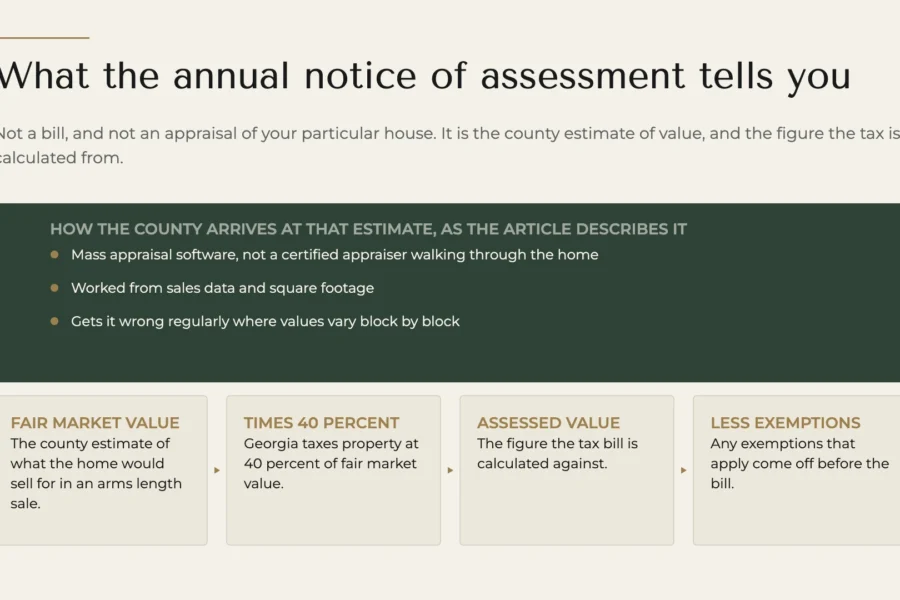
Once you own, the spring assessment notice is your window to question your value. If it looks high, read how to appeal a Fulton County assessment and other ways to lower your property taxes in Georgia.
Your exact numbers depend on the county, the city, the seller’s exemptions, and your closing date, which is why I like to estimate a home’s real tax cost before you write an offer instead of after.
Property Taxes When You Buy FAQs
Yes, for the part of the year after closing. The seller’s share is usually credited to you at closing, and the full bill is paid either at closing or by you or your escrow account when it arrives in the fall. Your closing statement shows how the year was split.
Georgia counties bill the owner of record on January 1. If you bought after that date, the bill may go to the seller, even though you agreed to pay part or all of it at closing. Some counties also send a copy to the new owner, so check your county’s site if you haven’t seen one.
No. The exemption belongs to the owner who filed it. It may still affect the current year’s bill, but you need to file your own application with the county by April 1 to get the exemption for the next tax year.
Estimates are often based on last year’s bill, so the actual bill may be higher or lower. Whether you and the seller settle the difference depends on your contract, so ask your closing attorney how your contract handles it before closing.
If your loan has an escrow account, your servicer pays the bill from it. Georgia counties don’t mail bills to lenders, so forward any bill you receive and confirm it was paid. You’re still responsible if a payment is missed.
Next steps
The seller pays for their part of the year, you pay for yours, and the proration line on your closing statement is where that split happens. If you’re starting your search and want the full monthly cost of a home, taxes included, before you make an offer, reach out through my buyer page and we’ll build your numbers together.
This post is general information, not legal or tax advice. Confirm your bill, exemptions, and proration terms with your county tax commissioner and your closing attorney.
Keep reading
- Related readingShould I Buy a House With a Septic Tank in Georgia?
- Related readingHow Do VA Loans Work When Buying a Home in Georgia?
- Related readingIs Winter a Good Time to Buy a House in Atlanta?
Written by
Kristen D. Johnson, REALTOR
Metro Atlanta, intown and out. Grew up in East Point, lives in Edgewood, and has worked both sides of the perimeter long enough to know where the map lies to you.
Work with Kristen Johnson Real EstateThinking about a move in Metro Atlanta?
Tell me what you are weighing up and I will tell you what I would do, in plain terms, before you commit to anything.